Feeding a 20-person office team every single day without turning your admin staff into full-time caterers takes a plan, not a phone tree of Swiggy orders. This guide breaks down how monthly food delivery in Ambattur actually works for offices, what to check before signing up, and which setup fits your headcount.
- Satti Kulambu delivers home-style South Indian meals, tiffin and biryani direct to Ambattur offices in 2026 — skip the app-fee markup.
- Daily lunch thalis suit teams under 30; mixed tiffin-and-meal rotations suit 30-plus staff with varied tastes.
- Avoid single-cuisine catering trials that skip a tasting week — you find out about spice-level mismatches too late.
- Direct ordering with a cloud kitchen like Satti Kulambu means no third-party delivery app commission eating into your budget.
Why this matters
Office lunch in Ambattur usually falls into two failure modes: everyone orders separately from five different apps, or the office picks one caterer and gets the same sambar-rice combo every day until people stop eating it. Neither scales past a few weeks.
A monthly food delivery arrangement solves both problems if it's set up right — consistent quality, rotating menus, and one invoice instead of forty individual UPI payments. Get the setup wrong and you end up with cold food, missed deliveries during Chennai's monsoon traffic, or a menu so repetitive that half the team goes back to ordering separately by week three.
Who this is for
This is written for office managers, HR admins, and team leads in Ambattur handling lunch or tiffin for a staff of 10 to 100 — IT parks, small manufacturing units, co-working spaces, and startup offices where daily food ordering has become someone's unofficial second job. If you're coordinating meals for a household instead of a workplace, the criteria below still apply, but the quantity math changes.
What to look for in monthly food delivery for offices
Menu rotation across the week
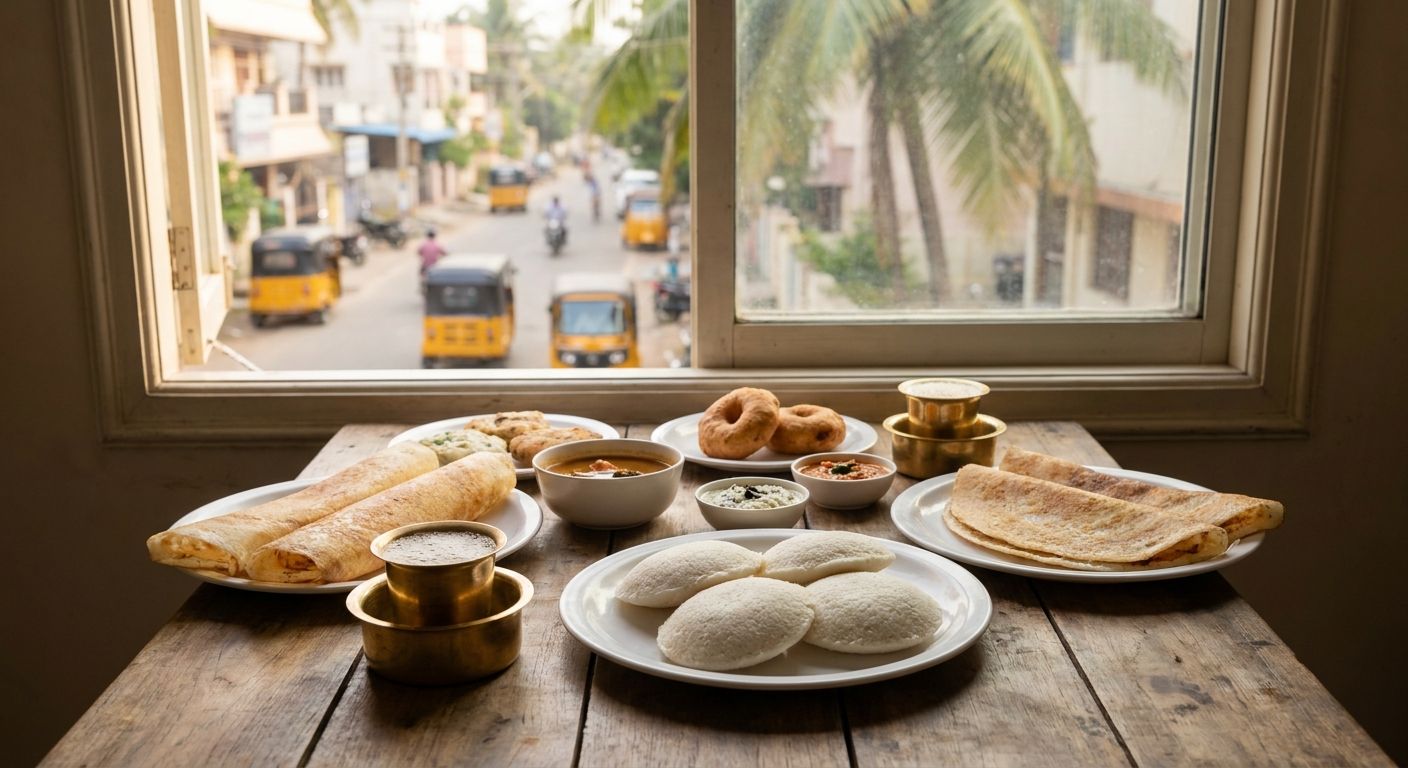
A single fixed thali every day burns out even the most food-tolerant office by day ten. Look for a kitchen that rotates between rice varieties, kulambu types, and tiffin days — pongal or kal dosa on some mornings, meals with different kulambu on others — so lunch doesn't feel like a subscription penalty.
Delivery window reliability
Offices run on fixed lunch breaks, usually a tight 30 to 45 minute window between 12:30 and 1:30 PM. A vendor who's vague about delivery timing on Ambattur's internal roads during peak traffic will cost you productive hours every time lunch arrives late.
Portion sizing for mixed appetites
Office teams have wildly different appetites — the person who eats a light tiffin and the person who needs a full meal with extra rice. A plan that offers at least two portion tiers avoids the awkward math of ordering extra separately.
Hygiene and sourcing transparency
Homemade-style cooking sounds appealing until you don't know how the kitchen sources vegetables or stores prepared curries overnight. Ask directly how meals are prepared each day rather than assuming "home-style" means small-batch and fresh.
Billing and invoicing simplicity
An office ordering food for 20-plus people every working day of 2026 needs one monthly or weekly invoice, not forty individual transaction receipts to reconcile at month-end. This alone is why most offices move away from ordering through consumer delivery apps.
Flexibility for headcount changes
Office strength shifts — a new hire joins, someone's on leave, a client team visits for the day. A rigid fixed-quantity contract punishes normal week-to-week fluctuation; look for a plan that adjusts count with a day's notice.
Top picks by office size and need
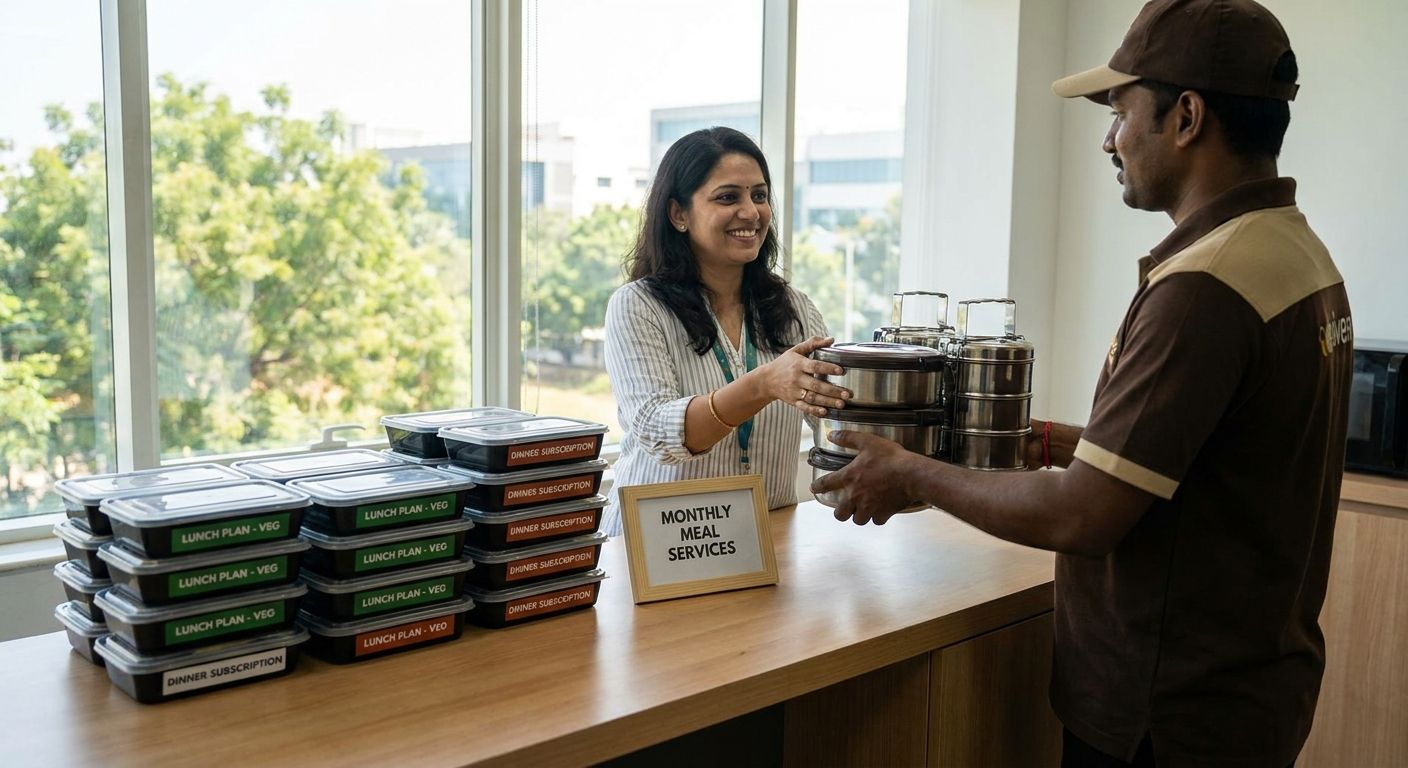
The safe pick — daily lunch thali subscription. Best for offices under 30 people wanting one consistent, filling meal at lunch: rice, a rotating kulambu, a vegetable side, and curd. Works well when the team has moderate spice tolerance and doesn't need variety beyond the main meal. Buy if lunch is your only daily food need.
The variety pick — tiffin plus lunch combo. Best for offices with staggered work hours where some employees want a morning tiffin (pongal, kal dosa, idli-vada rotation) and others want lunch only. This suits mixed teams of 30 to 60 where a single meal type doesn't fit everyone's routine. Consider this if breakfast-skippers and full-lunch eaters both work under your roof.
The bulk pick — biryani or festive-day bulk order. Best for offices marking a monthly milestone, a client visit, or a Friday team lunch rather than daily ordering. One large biryani order replaces scattered individual food orders for a single occasion. Consider for occasional use, Skip as your only weekday plan since daily biryani gets expensive and repetitive fast.
The high-headcount pick — mixed rotation for 60-plus staff. Best for larger Ambattur offices needing volume without sacrificing rotation — a weekly cycle across different kulambu types, tiffin days, and occasional biryani slots. Needs advance headcount confirmation each week to avoid waste. Buy if your office has a dedicated admin coordinating orders.
Getting these plans set up starts with a direct conversation rather than guessing from a generic menu card — Satti Kulambu runs meal subscriptions and bulk orders specifically for Chennai offices and households, cutting out the delivery-app layer that adds cost without adding food quality.
What to avoid
- Single fixed menu with no rotation option — looks simple to manage, but staff attrition on lunch orders happens fast once week two repeats week one exactly.
- Vendors quoting delivery "around lunchtime" — no fixed window means someone in your office is refreshing WhatsApp at 12:45 wondering where the food is.
- Ordering through third-party apps for daily office volume — commission fees on every single order add up over a full month far more than most offices realize, compared to ordering direct with a cloud kitchen.
Set up office meals directly
Talk to Satti Kulambu about a monthly plan sized for your Ambattur team.
Verdict comparison
| Plan type | Best office size | Menu variety | Delivery frequency | Verdict |
|---|---|---|---|---|
| Daily lunch thali | Under 30 | Rotating kulambu, fixed format | Daily, one window | Buy for simple daily lunch |
| Tiffin + lunch combo | 30-60 | High — breakfast and lunch items | Twice daily or split shifts | Buy for mixed schedules |
| Bulk biryani / occasion order | Any size, occasional | Single dish, large quantity | One-off | Consider, not daily use |
| Mixed weekly rotation | 60+ | High — full weekly cycle | Daily with weekly planning | Buy with dedicated coordinator |
FAQ
What is the best monthly food delivery option in Ambattur for offices?
For offices under 30 people, a daily lunch thali subscription is the simplest option in 2026 — one consistent meal with rotating kulambu instead of a fixed repeat menu. Larger teams do better with a mixed tiffin-and-lunch rotation.
Is ordering directly from a cloud kitchen cheaper than a delivery app for offices?
Yes, direct ordering avoids the per-order commission that food delivery apps charge, which adds up fast across daily orders for a full team. This is why most Ambattur offices moving to monthly plans in 2026 order straight from the kitchen instead of through an app.
How much lead time does an office need to set up a monthly meal plan?
Most kitchens need a few days to confirm headcount, portion tiers, and delivery timing before starting a subscription. Give at least a week if you're switching from individual app orders to a coordinated office plan.
Can office meal plans handle daily headcount changes?
A flexible plan should let you adjust quantity with a day's notice for leave days or new hires. Rigid fixed-quantity contracts are the main reason offices abandon subscription meals within the first month.
Does South Indian tiffin delivery work for office breakfast as well as lunch?
Yes — kitchens that rotate pongal, kal dosa, and idli-vada can cover office breakfast for staff arriving early, separate from the lunch order. Combining both under one plan is common for offices with staggered shift timings.
What portion size should an office order per employee?
Most vendors offer at least two tiers — a lighter tiffin-style portion and a full meal portion with extra rice. Offering both avoids employees under-ordering and then buying a second snack later in the day.
Is bulk biryani ordering suitable for daily office lunch?
No — biryani works well for occasional team lunches or celebrations but gets repetitive and costlier as a daily order compared to a rotating thali or tiffin plan. Reserve it for monthly milestones rather than weekday defaults.
One last thing
The offices that stick with a monthly plan past the first quarter of 2026 are almost never the ones chasing the cheapest per-meal rate — they're the ones that picked a kitchen willing to adjust the weekly rotation based on actual feedback instead of running the same fixed menu on autopilot. Ask any vendor, including Satti Kulambu, how often the menu changes before you sign up for a full month.